Imagine this … You’re sitting at home on a Saturday morning drinking your coffee. Your kid has borrowed the family car to go hang out with their friends at the mall. You receive a phone call from an unknown number and pick up. On the other end of the line, you hear a familiar voice.

“Mom, I need your help. I was in an accident. I hit a pregnant woman with the car on my way home, and she’s been sent to the hospital with multiple injuries. I’m being held at the police station and I’m really scared”.
You are shocked and panic begins to set in. On the line, another voice begins to speak. They say they are a lawyer assigned to your child’s case.
“Hello, are you their parents? Your child is being charged with dangerous driving while texting. They are being held in custody, and it will cost you $9,800 to have them released on bail. A court official will come to your home to pick up the cash payment so that this can all be processed quickly. There is a court order forbidding any involved parties from speaking with anyone, even your family, about this case”
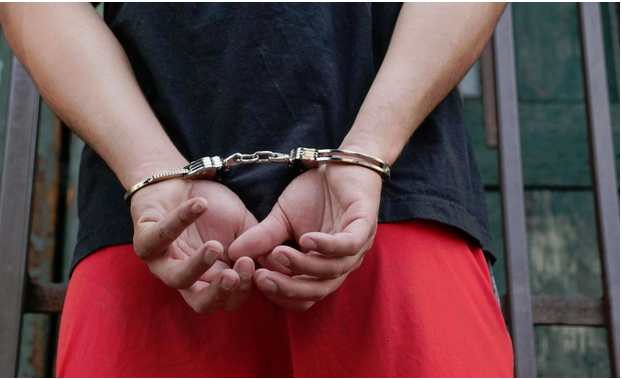
Like any good parent, if your child calls for help, you drop everything to go help them. Without thinking twice, you immediately rush out of the house and go to the bank to withdraw the money. A police station is no place for a kid, even if they made a serious mistake like this.
Later that day, a young man comes to the door and collects the bail money. That afternoon, you receive another call from the lawyer assigned to your child’s case. They say that your child now needs to pay an additional fine of several thousand dollars.

Again, you rush to the bank and withdraw the money. You do as you were told, packaging the cash and bringing it to a courier service to send it to the address you were given. You have a brief moment of hesitation. The address you were given is in a different city. It is at this point that you begin to feel like something is not right. You pause, still holding the cash, and reach for your phone.
In your panic, you never thought to try calling your kid's phone directly. You take a deep breath and press call.
“Hey Mom, what’s up?”
Through the phone, you can hear their friends laughing, ambient music playing in the background. Their tone is calm as they speak with you. Your suspicions begin to be confirmed, this is not what a police station sounds like. You ask them if they are ok.
“What are you talking about? I’m fine. We’re still at the mall, but I’ll be home for dinner at 6, don’t worry”
That confirms it. It was never your kid on the other side of that call. They may have sounded like them, but it was never them. You were scammed.

Unfortunately, this is a very real scenario, and phone scams like this are becoming increasingly effective with the development of deepfake voice cloning.
As technology gets smarter, so do the ways it can be misused and abused. But here is the good news: with understanding, open communication, and a few practical steps, families can stay one step ahead.
What Are Deepfakes?
Deepfakes are fake videos, photos, or audio clips created using artificial intelligence (AI) to mimic real people

The “deep” in “deepfake” comes from the type of artificial intelligence that is used to create them: deep learning. Deep learning models are trained to process data and make predictions much like how our human brains do. Trained on massive amounts of data (like images, voices, and videos), these models are able to generate convincing realistic fake content.
The type of deepfake technology used to run these kinds of phone scams is called voice cloning. This method uses AI to replicate someone’s voice based off of audio clips of them speaking.
How Does AI Voice Cloning Work?
Scammers will typically research your family on social media with the goal of finding videos that have a family member’s voice in them. Scammers can also get access to this data through your voicemail or even a short recorded phone call.

Once they have a recording, they use AI tools to replicate your family member’s voice and use it to say their own script. They commonly use scripts that claim a family member was in an accident or a dangerous situation (like a kidnapping). They will call you and use this generated voice message to scare you and convince you that you need to send them money now to keep your family member safe.
Protecting Your Family from Deepfake Phone Scams
Here are a few simple ways to lower your risk of falling victim to deepfake phone scams:
- Always call others to verify an emergency. If you are called by a family member who is in distress, always try calling their personal phone number, even if the call looks like it is coming from them. If they do not pick up, try calling people close to them who may know where they are and if they are safe.
- Don’t trust caller ID. Scammers can use fake phone numbers to make it look like a call is coming from someone you know. Hang up and call the person at a trusted number you know is theirs.
- Set up family-only codewords or questions. If a family member calls you in an emergency, ask them for the codeword you set up, or ask them to answer a question that only you and your family members know the answer to. Remember to change your codewords and questions if you suspect they may have been shared with someone outside of your family.
- Limit public access to audio and video recordings on social media. Keep social accounts private and share personal content only with people you trust
- Be suspicious of cash requests. Scammers will likely ask for money to be delivered in a way that is hard to recover. Be suspicious if they are requesting cash, cryptocurrency, gift cards, wire transfers, or pre-paid debit cards. With these methods, once the money leaves your account, you can’t get it back.
- Stay calm and slow down. Scammers hope you won’t have time to think rationally and investigate the situation, ask questions, or call others to verify what is going on. Very few situations actually demand the immediate response they are asking for.
Teach healthy skepticism. Encourage kids to pause before believing everything they hear on the phone, and to always double check with a parent before sending money to anyone.

At the end of the day, the number one thing you can do to keep your kids and family safe is investing in cyber education. If kids can learn about all the AI tricks being used by scammers, they will be much better prepared to handle these risky situations safely.
Our level two course, Defender Shield, goes into depth about all of these AI tricks and equips kids with the skills and knowledge they need to defend against hackers and scammers! To register for our courses, check out our website here: https://kidsshield.ca/services/shields
Be Educated. Be Connected. Be Safe.